
|
Getting your Trinity Audio player ready...
|
I wanted to address the reasons why I built a news curating application. We do not consume news today in the same way that we once did one or two decades ago. It used to be that we relied mainly on newspapers, radio, and television for our news. We learned about news when publishers or producers were ready to release it. Now, we get the majority of our news from platforms such as Facebook and Twitter. This has coincided with a decline in the newspaper industry, so there are even fewer community newspapers. We now get a lot of our local news via social media.
I’ve observed that this has lead to a dispersal of our information across several platforms, groups, pages, and human sources. Stories about our schools, local businesses, or government once were reported on by newspapers, but now we’re getting them directly from the source, bit-by-bit.
I hoped to change this when I launched Mastodon by surveying social media once a week and compiling a summary of the news I would share with readers. But, the challenge has been keeping up with all the news that’s out there. It not a one-person process.
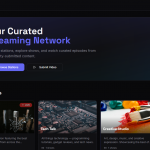
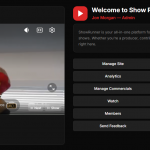
I created Hexfield as a tool which could help me curate and summarize the news, but it goes a little farther. Content creation and page layout require time and effort, so it’s worth it to cut back where ever I can. So, I built in the means to quickly compile the articles in a dashboard and export them in different formats. This means that Hexfield can help with news curation, copy editing, and then generate a weekly publication that’s ready to share. The content can also be dowloaded as a spreadsheet, and then uploaded into the Mastodon website for archiving.
One additional tenet of my development process for this project has been to create some way to share a directory links to pertinent sources of information. Articles will already include lists of sources and additional resources, so I’ve just re-packaged that information into a directory which can be shared towards the end of the outputted PDFs.
Do you remember the TV Guide? Or the phonebook? These were examples of publications which were primarily directories (TV listings in the TV Guide, and phone listings in the phonebook) but might also include relevant articles. I’ve often envisioned a way to produce something similar related to community news and events. Want to learn more? Here is all of the additional information that you might need. This way, each issue of the publication is relevant until an updated version can be issued.
Is Hexfield intended to replace Facebook or Twitter? No, and if anything I would say that it was designed to augment the social networks. A curated hexfield dashboard helps its audience stay informed, while at the same time providing them with the tools they need to research further. This is a step farther than social media networks, because they only show you what people have posted, and then leave it up to you to puzzle everything together. I would say that a hexfield dashboard will be a little like being in the newsroom while reporters work on stories, and then being able to watch from inside the studio while they broadcast the news.
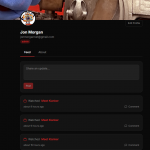
One additional advantage the dashboards bring is that readers can also be contributors by sharing news that they hear about. This isn’t too different from a forum or Reddit, except the contributions are moderated before they’re published.
I wanted to address one more aspect of the news environment that we’re operating in currently: fewer newspapers mean that there will be fewer archives to turn to if we ever want to research past events in our communities. We might have been able to turn to newspaper archives or microfiche in the past, but as more and more of our news is delivered electronically, there really hasn’t been a means of storing records centrally. A hexfield dashboard might help change that by at least summarizing what happened and providing references to larger sources.
If this sounds interesting, or something you’d like to try out, feel free to reach out to me either via the platform where you’re reading this or by email at jon@gazerbeam.com. I could use the help testing all of these features and locating weak spots.